পণ্য


.svg)


.svg)


Pricing is one of the most consequential decisions you'll make as a print-on-demand seller. Set prices too low and you erode every margin that keeps your store alive. Set them too high and you hand customers to competitors. The sweet spot exists — and it's reachable with a clear process.
This guide walks through the exact steps to price your POD products for sustainable profit, with specific tips tailored for GearLaunch sellers.
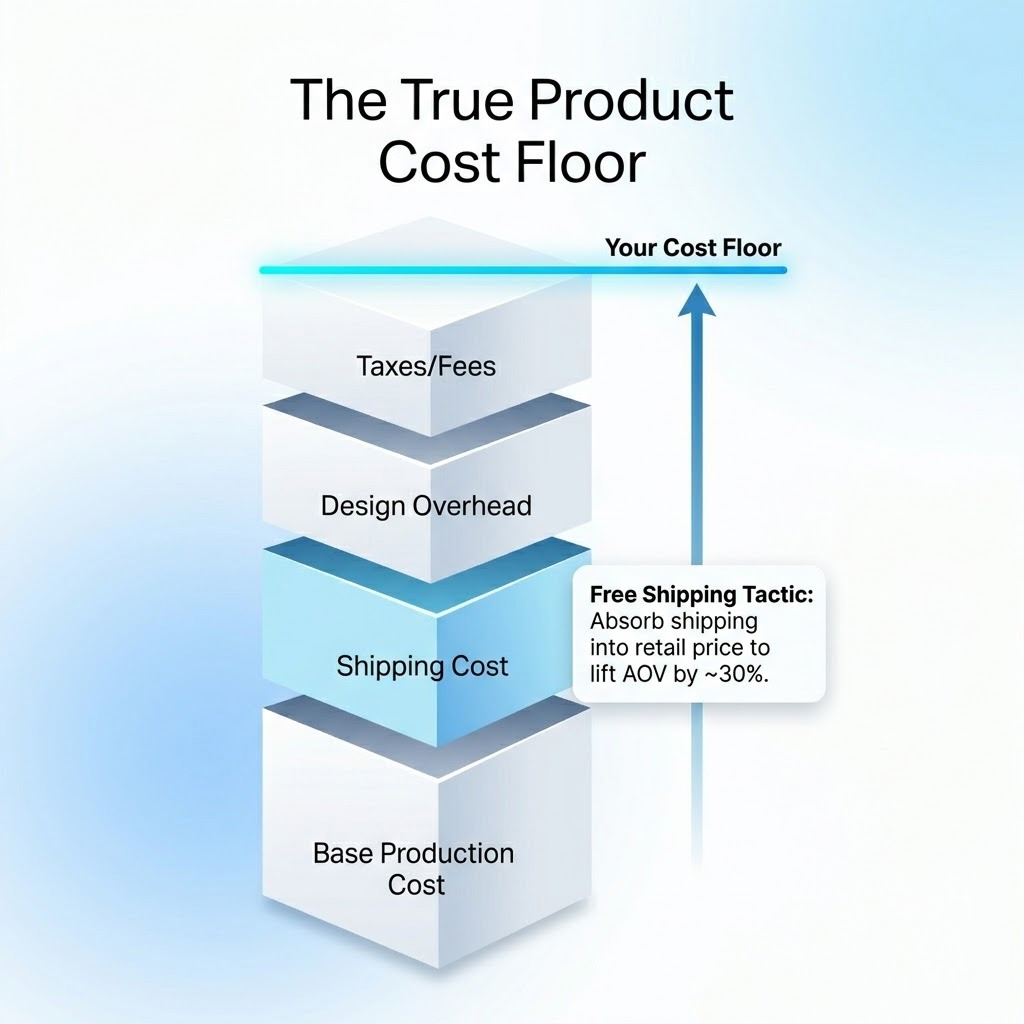
Before you can price anything, you need to know what it actually costs to get a product to a customer's door. Most sellers undercount here — and that's where margin quietly disappears.
Design cost is often overlooked. If you're buying designs, divide the purchase price by the minimum number of units you expect to sell. If you're creating them yourself, assign yourself an honest hourly rate and multiply by the hours spent. This keeps your time from becoming invisible overhead.
Production and shipping cost is more straightforward with POD. Since GearLaunch handles fulfillment, you're working with a known base price per product — no warehousing, no inventory risk. Still, shipping is a real line item. According to 2025 data, 48% of online shoppers abandon their carts when unexpected shipping costs appear at checkout. Many successful sellers absorb shipping into the retail price to offer free delivery — a tactic worth modeling out, since free shipping orders carry roughly 30% higher average order value.
Taxes and platform fees round out your cost picture. U.S. customers pay sales tax ranging from 4% to 10% depending on state; EU customers face VAT of 17% to 27%. The GearLaunch platform charges no seller fees, which already removes a variable that cuts into margins on other platforms.
Once you've added up every line item — design, production, shipping, taxes, and any monthly platform costs — you have your cost floor. Everything above that is your margin to protect and grow.
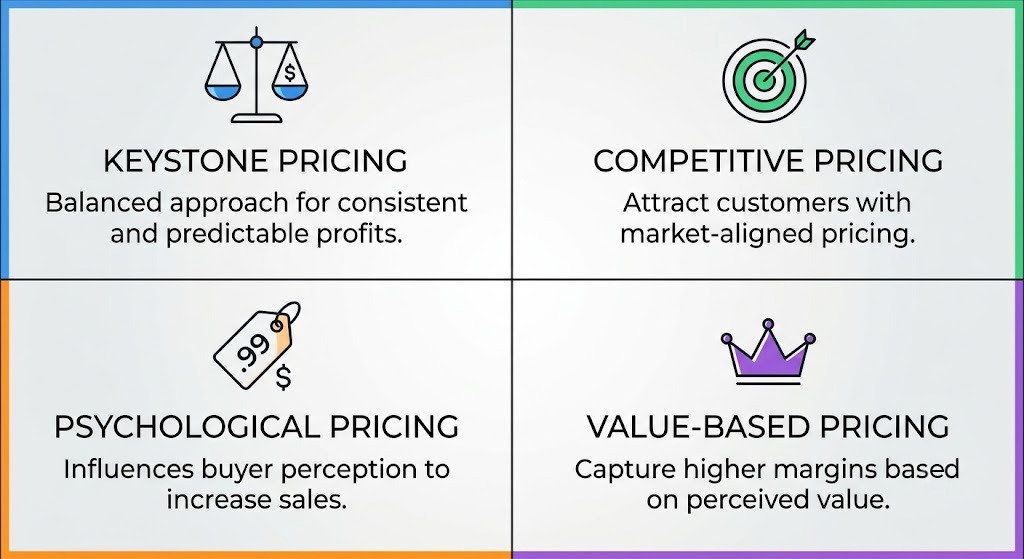
With your costs in hand, you can make an informed choice about how to position your prices in the market. There's no universally correct strategy — it depends on your niche, your audience, and the products you're selling.
The most effective strategies for POD sellers are keystone pricing (doubling your cost to set retail price), competitive pricing (benchmarking against similar stores in your niche), psychological pricing (using $X.99 price points to drive perceived value), and value-based pricing (charging what the design and niche loyalty can command, regardless of cost). For a deeper look at how each approach works in practice, GearLaunch's post on 5 Key Elements of a Good Pricing Strategy breaks down the considerations behind each method.
One important point: don't anchor your price to the cheapest competitor in your category. Research on POD profit margins consistently shows that sellers who compete purely on low prices end up with margins too thin to survive advertising costs, promotions, or returns. Niche designs and personalized products can justify premium pricing because buyers aren't comparison-shopping on price alone — they're buying something that speaks directly to them.
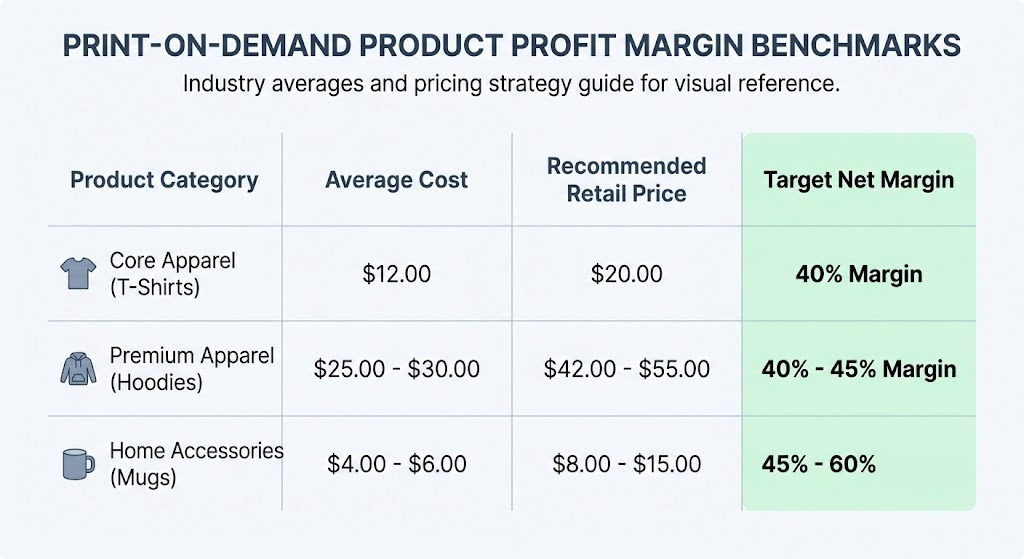
Once you know your costs and strategy, it's time to set your margin. For POD businesses, industry benchmarks suggest targeting 20%–40% net margin on core products, with apparel typically achieving 40% and accessories like mugs reaching 45%–60%.
The formula is straightforward: Total cost + profit margin % = retail price. A t-shirt with $15 in total costs priced at $28 yields a 46% margin — healthy by any POD benchmark.
As you grow, resist the urge to race to lower prices. Brand-recognizable stores command premium pricing precisely because customers trust them. Start at a fair margin and adjust based on data, not anxiety.
Don't forget the overhead that doesn't vary with each sale. Domain hosting, advertising tools, design subscriptions, and any premium platform upgrades are real costs that should factor into your pricing model. Divide your total monthly fixed costs by your expected order volume to understand the per-order burden. This gives you a more accurate break-even picture and helps you identify the minimum sales volume you need each month before a single dollar of profit appears.
This is also the right moment to think about your full product catalog — are you pricing a single hero product or building a range where some products carry higher margins to offset lower-margin entry points? A well-structured catalog gives you flexibility that single-product pricing can't.
Pricing isn't set-and-forget. As your store accumulates data — what converts, what gets abandoned, which designs command loyalty — you'll be in a better position to make confident adjustments. Seasonal windows, new product launches, and competitive shifts all create natural review points.
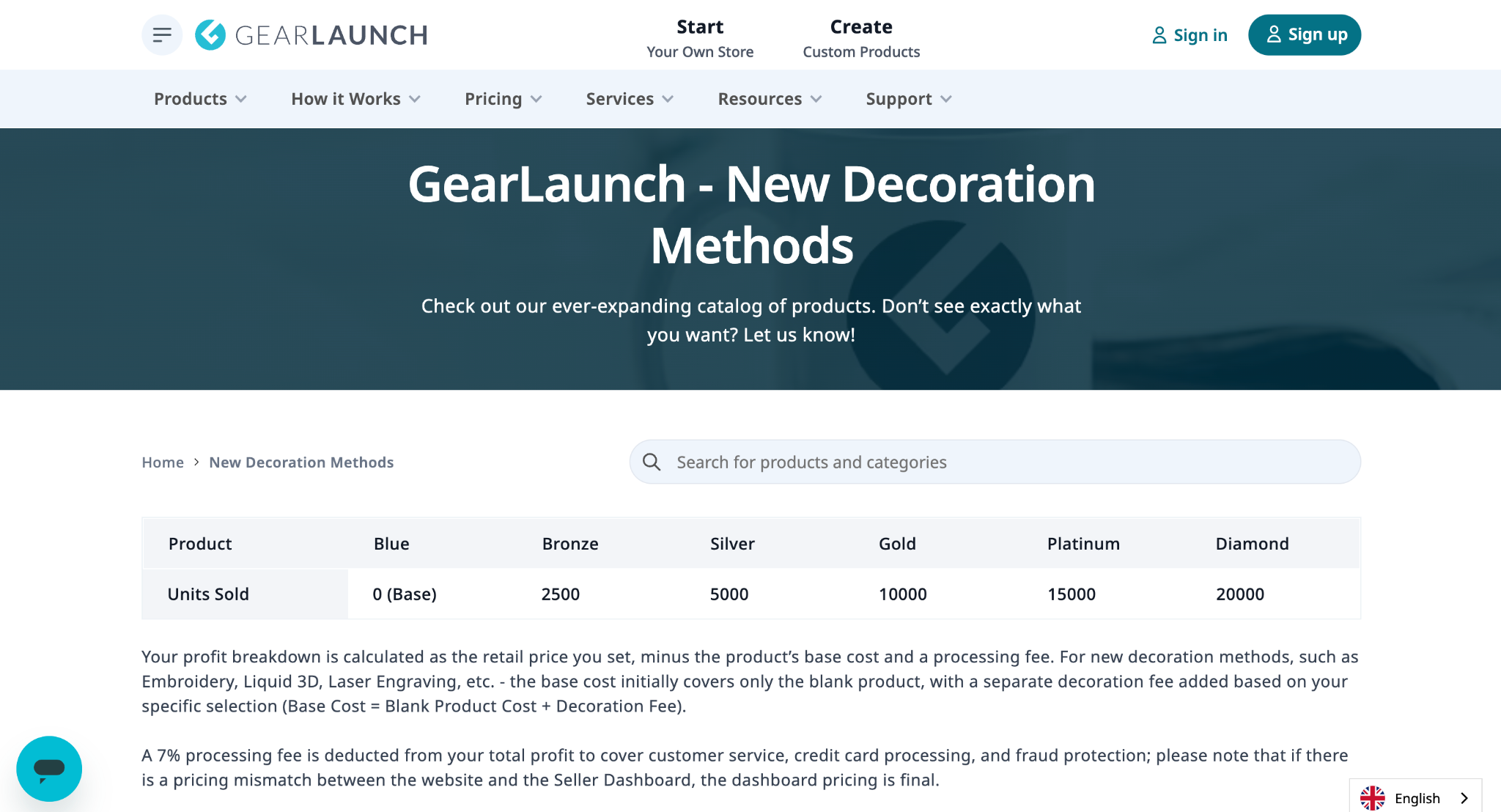
To ensure your baseline costs align with your strategy, be sure to check the latest Pricing on GearLaunch as well as updates on our New Decoration Methods.
GearLaunch's store metrics tools let you sort campaigns by profit, conversion rate, and upsell performance. Use that data to identify your highest-margin campaigns and understand which pricing setups are actually working — not just selling volume, but generating real profit per order.
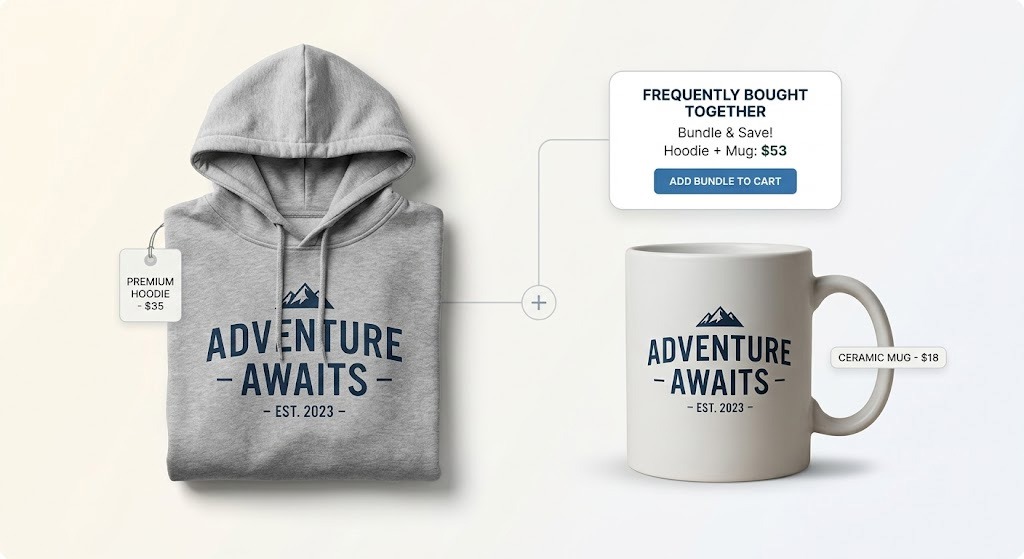
Align your upsell pricing with your main product. Upselling is one of the highest-ROI moves available to a POD seller. The rule: if your primary product is priced at a premium, your upsell should match that positioning. A $35 hoodie deserves a $25 upsell — not a $12 clearance item. Mismatched pricing signals undercut the perceived value of everything in your store. Learn exactly how to set it up in the GearLaunch Academy upsell guide.
Use promo codes strategically, not habitually. Discount codes — whether for free shipping, a percentage off, or a fixed dollar amount — are powerful conversion tools when deployed at the right moment. The risk is conditioning your audience to wait for a deal. Reserve them for specific campaigns, new product launches, or re-engagement sequences rather than running them continuously. When building a new campaign, the GearLaunch Academy campaign setup guide walks through exactly where to set your price and upsell discount in one place.
Let cross-sell automation work for you. GearLaunch automatically surfaces related campaigns at checkout, creating a built-in cross-sell path with no extra setup required. The key is making sure your related products share a design language or theme — a buyer who purchased a dog breed tee is far more likely to add a matching mug or tote than a random unrelated design. Build your catalog with these pairings in mind, and your average order value rises without touching your listed prices.
Getting your pricing right is the foundation everything else builds on — your ad spend efficiency, your margin for promotions, your ability to grow. Browse the GearLaunch product catalog to see what's available at every price point, or create a product and start building your pricing model today.
What is a good profit margin for print-on-demand products? Most POD sellers target a net margin of 20%–40%. For apparel like t-shirts and hoodies, 40% is a common benchmark. Accessories such as mugs and drinkware can often sustain 45%–60% margins due to lower production costs relative to perceived value. Your actual margin will depend on niche, design uniqueness, and whether you absorb shipping costs into the retail price.
How do I calculate the price for a print-on-demand product? Add up every cost associated with the product: base production cost, shipping, design overhead, platform fees, and a proportional share of your fixed monthly costs. Then apply your target margin percentage. The formula is: (Total Cost) ÷ (1 − Target Margin) = Retail Price. For example, a product with $15 in total costs targeting a 40% margin prices at $25.
Should I offer free shipping on my POD products? Free shipping significantly improves conversion rates — research shows that roughly 82% of online shoppers prefer free shipping and are more likely to complete a purchase when it's offered. The most effective approach is to build the shipping cost into your retail price so customers see a single, clean number at checkout. This requires a slightly higher list price but typically results in fewer cart abandonments.
How do I price products for a product launch? For a new product launch, start by calculating your floor price (total costs + minimum acceptable margin), then research comparable products in your niche to find the competitive range. Launching slightly below your target long-term price can help generate early sales and reviews, giving you the data to confidently raise prices as the product proves itself.
What are the biggest pricing mistakes POD sellers make? The most common mistakes are: pricing without accounting for all costs (especially design time and shipping), copying the cheapest competitor without a strategy, never reviewing prices after the initial launch, and using discounts so frequently that customers learn to wait for sales. Each of these erodes margin in a different way — and often all at once.


.svg)
.svg)
.svg)