পণ্য


.svg)


.svg)


I'll never forget the day I realized I couldn't afford to run ads anymore.
It was month three of my print-on-demand business. I'd blown through $800 on Facebook ads with barely 15 sales to show for it. My cost per acquisition was $53, and I was selling mugs for $24.99. Do the math—it was brutal.
I had two choices: quit or figure out how to grow without spending money I didn't have.
So I went all-in on organic marketing. No ads. No budget. Just strategy, consistency, and a lot of trial and error.
Six months later, I'd made over 1,000 sales. All organic. $0 in ad spend.
Here's exactly how I did it—and how you can too.
Let's get real: the print-on-demand industry loves to sell you the dream of "just run ads and watch the money pour in." But here's what nobody tells you: 1 in 3 eCommerce visitors come from organic search, and organic search drives 53% of website traffic on average (Promodo, 2025; BrightEdge).
Translation: More than half of your potential customers are finding products through free channels, not paid ads.
Even better? 69% of total eCommerce traffic comes from an organic source (Google) (DemandSage, 2025). That means the majority of people buying online are discovering products without ever clicking on an ad.
The Cold Hard Truth:
You don't need a massive ad budget. You need a smart organic strategy.

Here's the framework that took me from desperate to profitable:
Most sellers ignore SEO because they think it's complicated. It's not.
49% of businesses believe that organic searches bring them the highest ROI (DemandSage, 2025). And 75% of people don't go beyond Google's first result page (DemandSage, 2025).
That means if you're not optimizing, you're invisible.
What I Did:
Product Titles:
Include your main keyword + 2-3 related terms. Think about what real people actually type into Google.
Product Descriptions: I stopped writing like a robot and started writing like a human. Instead of "This is a ceramic mug," I wrote:
"Imagine starting your morning with coffee in a mug that was made just for you. Your name.
Your favorite quote. Your photo. This isn't just a mug—it's a daily reminder that you matter."
Keywords That Convert:
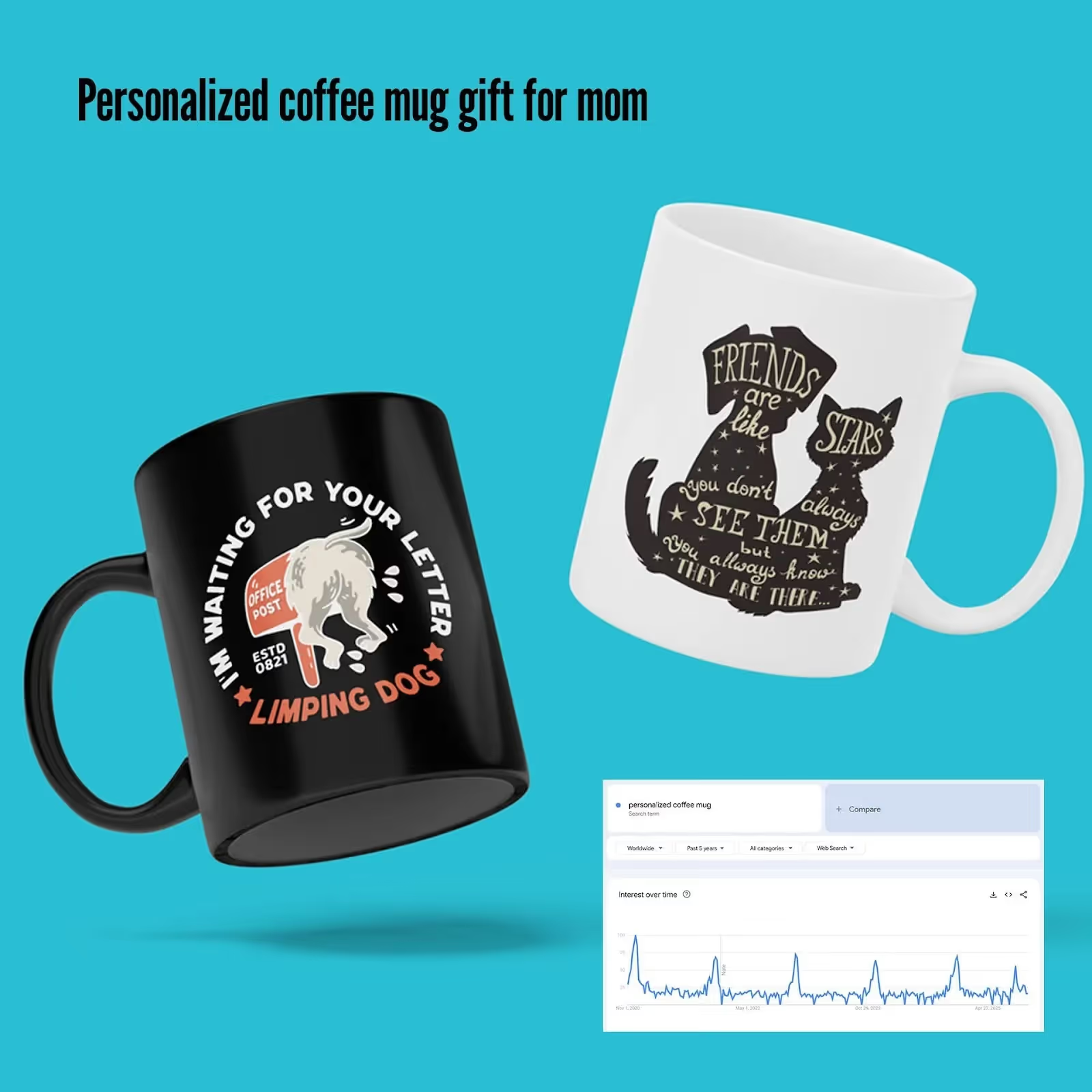
The Hack: Brands with a dedicated blog have 55% more traffic than those that don't (DemandSage, 2025). I started writing simple blog posts like "10 Personalized Gift Ideas for Coffee Lovers" and linked them to my products. Free traffic for months.
This was my secret weapon. While everyone was fighting for attention on Instagram and Facebook, I was quietly dominating Pinterest.
Here's why Pinterest is perfect for print-on-demand:
The Numbers:
That last stat is HUGE. It means people aren't searching for specific brands—they're searching for "personalized gift ideas" or "custom Christmas ornaments." That's your opportunity.
My Pinterest Strategy:
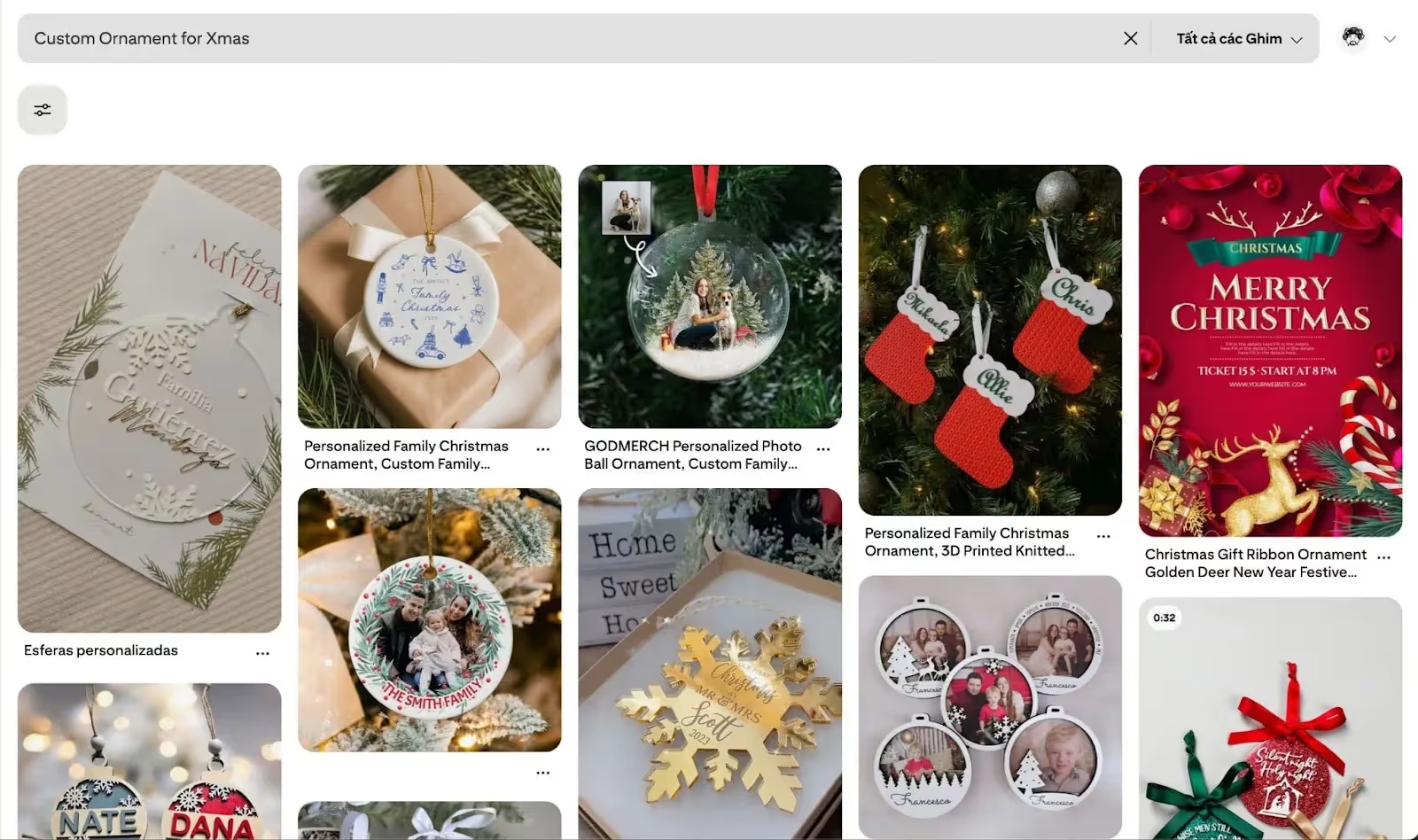
1. Create Pin-Worthy: Images I designed vertical images (1000 x 1500 pixels) that looked like magazine covers, not ads. Lifestyle photos, bright colors, clear text overlay.
Example: Photo of someone holding a custom mug with overlay text "Best Personalized Gifts Under $30"
2. Use Strategic Keywords: Every pin title and description included keywords like:
3. Post Consistently: I scheduled 5 pins per day (mix of new and re-pins). Used a free scheduler to batch-create for the week.
4. Create Gift: Guides Instead of just pinning products, I created boards like:
Each board had 20-30 pins, mixing my products with related content.
The Results: Within 3 months, Pinterest was driving 40% of my website traffic. All free.

Everyone thinks you need to go viral on TikTok to make sales. You don't.
Over 7 million businesses utilize TikTok for advertising and organic content, and small and medium-sized businesses report an 88% increase in sales after marketing products on TikTok (Social Champ, 2025).
The platform is projected to reach 1.8 billion monthly active users by late 2025 (Neal Schaffer, 2025), and the best part? The algorithm shows your content to non-followers if it detects engagement (Neal Schaffer, 2025).
What I Posted:
Behind-the-Scenes Content
People love seeing the human behind the business.
Product Features
Customer Reactions
When customers sent me photos or videos with their products, I asked permission to repost. User-generated content is GOLD.
Educational Content
My Approach: I posted 1 video per day. Not all of them performed well. But every 5-7 videos, one would hit 10k+ views. That's all you need.
Pro Tip: 71% of TikTok users decide whether to continue watching within the first three seconds (Swydo, 2025). Hook them immediately. Start with movement, a question, or a bold statement.
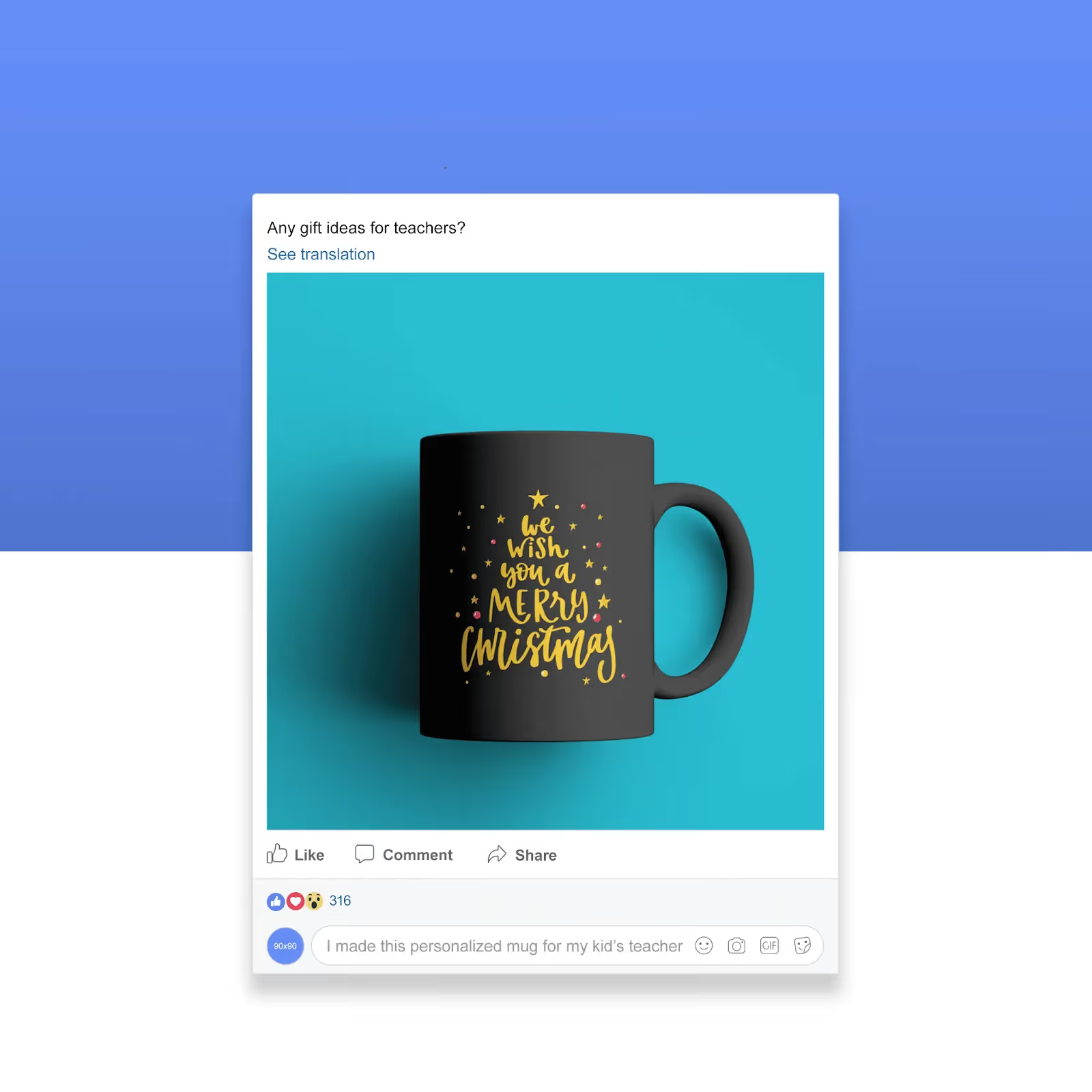
Reddit taught me to be subtle. Facebook Groups taught me to be helpful.
I didn't spam. I didn't post product links. I just showed up and added value.
Where I Engaged:
What I Posted:
Sometimes I'd subtly mention my store. Most times, people would ask. Either way, I drove traffic without being pushy.
The Rule: Add 10x more value than you ask for. Answer 10 questions before you mention your products once.
This was the game-changer.
Every time someone bought from me, I sent a follow-up email: "We'd love to see how you're enjoying your [product]! Reply with a photo and we'll send you 15% off your next order."
About 1 in 10 customers sent photos. I asked permission to share them on social media and my website.
Why This Works:
I reposted customer photos on Instagram, TikTok, and Pinterest with captions like:
"Meet Sarah! She ordered this custom mug for her mom's birthday. Look at that smile! 🥰"
People trust other people way more than they trust brands.
Consistency beats perfection. Here's how I stayed consistent without burning out:
Monday: Create 5 Pinterest pins (30 minutes)
Tuesday: Write 1 blog post OR update old post with new keywords (1 hour)
Wednesday: Film 3 TikTok videos (20 minutes)
Thursday: Write and schedule weekly email (30 minutes)
Friday: Engage in 2-3 Facebook groups (20 minutes) Weekend: Respond to comments, messages, and repost UGC
Total time: About 5-6 hours per week.
That's it. No fancy team. No expensive tools. Just consistency.
You don't need expensive software. Here's my stack:
For Pinterest:
For TikTok:
For SEO:
For Analytics:
Mistake #1: Expecting Instant Results Organic marketing takes time. My first month, I got 50 website visits. But by month 3, I was at 2,000+ per month.
Mistake #2: Trying Every Platform at Once I burned out fast trying to be everywhere. Pick 2-3 platforms and master them first.
Mistake #3: Not Tracking What Works For months, I didn't use Google Analytics. I had no idea where my traffic came from. Don't be like me—set up tracking from day one.
Mistake #4: Being Too Salesy When I stopped "selling" and started "helping," everything changed. People can smell desperation.
Mistake #5: Ignoring Mobile Over 60% of print-on-demand sales come from mobile devices (from your previous blog). I didn't optimize my store for mobile for weeks. Huge mistake.
Let's be honest: "$0" marketing isn't really free. It costs time.
In my first 3 months, I spent 15-20 hours per week on organic marketing. That's a significant investment.
But here's the difference: Time is scalable. Once you create a system, it gets easier. Once you build momentum, it compounds.
With paid ads, you're constantly feeding the machine. Stop spending, and sales stop.
With organic, you're building assets. A Pinterest board you create today can drive traffic for 6-12 months. A blog post can rank for years. An email list is yours forever.
The ROI:
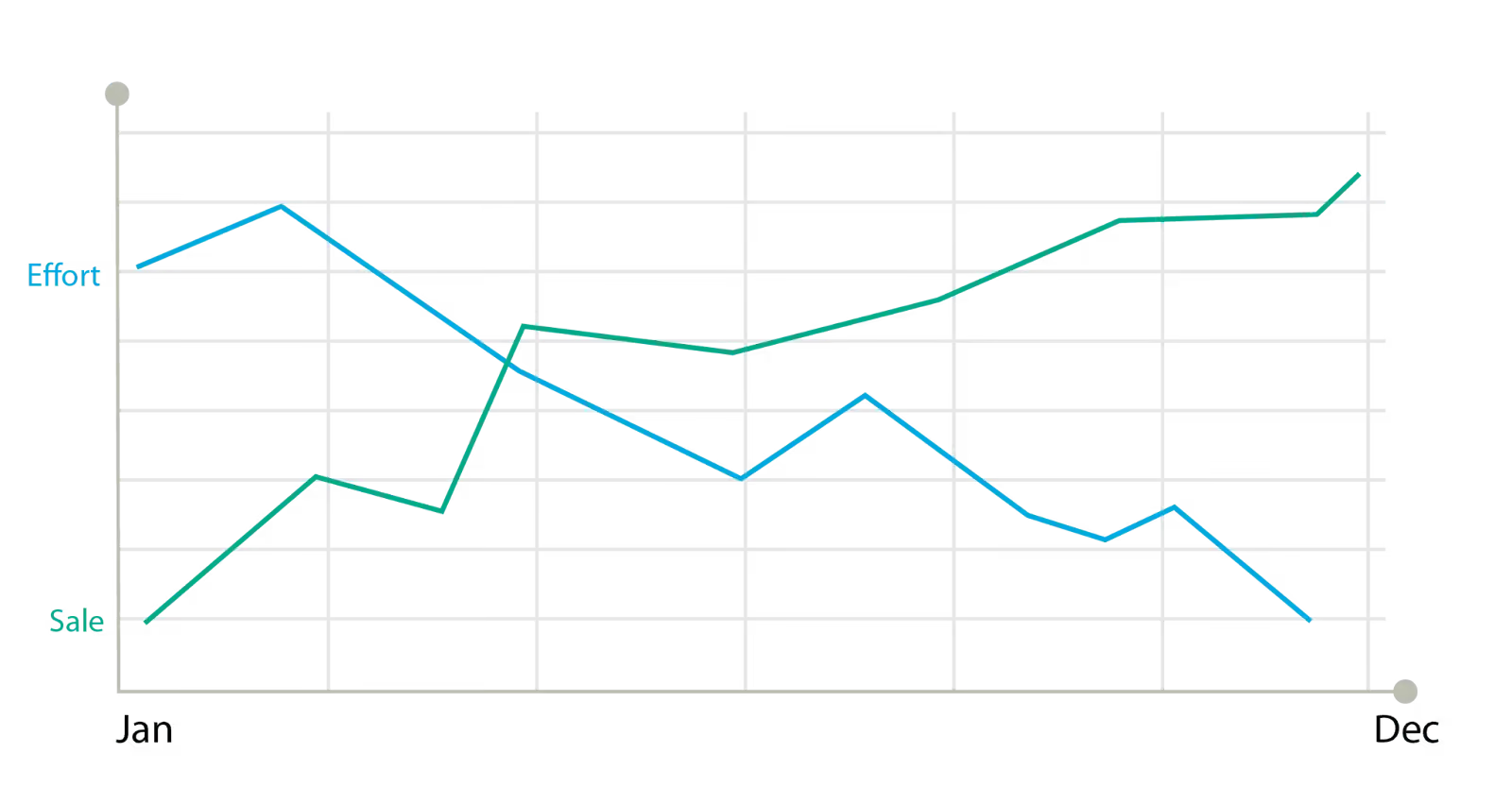
By month 6, I was spending 5-6 hours per week on marketing and generating 40-60 sales per month. That's when it clicked: I'd built a machine that worked without constant input.
Here's the truth: I eventually added paid ads back into my strategy. But not until I had organic systems working.
Add Paid Ads When:
Don't Run Ads When:
Organic marketing teaches you what resonates with customers. Once you know that, ads amplify what already works.
But if you're reading this because you can't afford ads right now? That's okay. I couldn't either. And I still built a profitable business.
The print-on-demand industry is projected to grow from $12.15 billion in 2025 to $37.85 billion by 2030 at a 25.52% CAGR (from your previous blog research). That growth isn't just from brands with massive ad budgets—it's from smart sellers who figured out how to grow organically.
With GearLaunch handling production and fulfillment, you can focus 100% of your energy on marketing. No inventory to manage. No shipping headaches. Just you, your products, and your strategy.
The difference between sellers who give up and sellers who succeed isn't money—it's consistency.
You don't need to go viral. You don't need 100,000 followers. You don't need a massive ad budget.
You just need to show up, provide value, and keep going when it feels like nothing is working.
Trust me—it's working. You just can't see it yet.
Ready to build your $0 marketing machine? Pick one strategy from this guide and start TODAY. Not tomorrow. Today.
Your GearLaunch store is ready. Your products are waiting. The only thing missing is traffic—and now you know exactly how to get it without spending a dime.
Which organic strategy are you going to try first? Drop it in the comments—I'd love to hear your plan (and cheer you on)!


.svg)
.svg)
.svg)