পণ্য


.svg)


.svg)


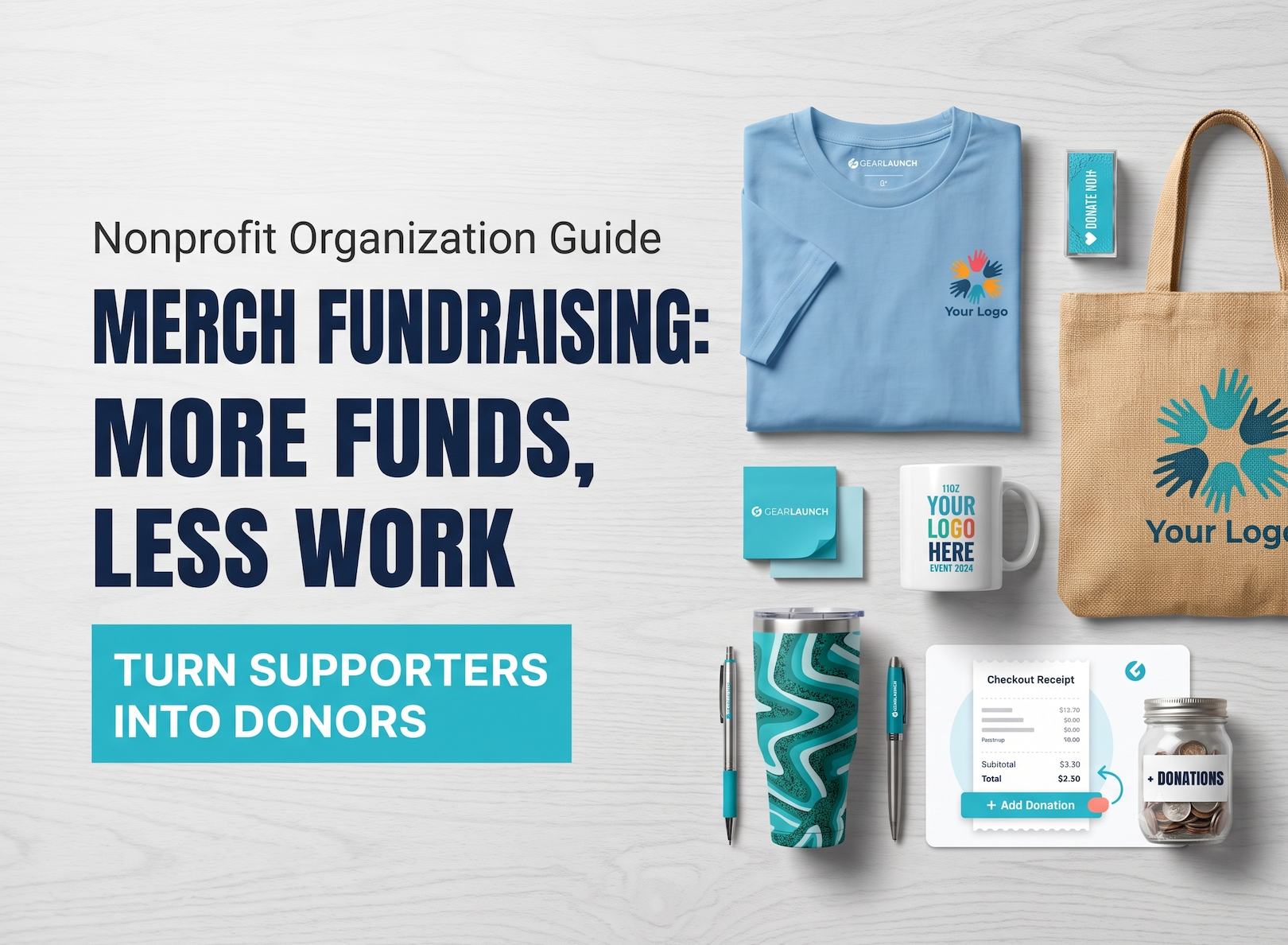
If your organization has ever thought about selling shirts or mugs to raise a little extra for the cause, you already know the catch: someone has to pay a printer before a single item sells. For a small congregation, nonprofit, or community group, that upfront cost is usually the whole reason the idea never leaves the meeting. And even when it does, it's volunteers — already stretched thin — who end up collecting cash, tracking sizes, and storing boxes of things nobody bought.
None of the ideas below require any of that. Here are five ways to turn merch into a real, low-effort fundraising channel — without your organization fronting a dollar or adding a new job to anyone's plate.
The Unisex Short Sleeve Classic Tee is the easiest starting point for most organizations — familiar, affordable, and something supporters will actually wear out in public, which quietly puts your name in front of people who've never heard of you.
How to use your logo: Center your existing logo or mission wordmark on the chest at a moderate size. GearLaunch prints this with sublimation or DTG, so if your logo has more than one color, it still prints in full color without extra setup cost.
Base cost: $9.33 (Blue tier).
Shipping (US): $6.19 for the first unit, $2.15 for each additional unit.
An 11oz Ceramic Mug is one of the cheapest items you can offer, and it earns its keep — it sits on a desk or kitchen counter, getting seen every single morning, long after the fundraiser that inspired the purchase is over.
How to use your logo: A mug wraps around, so a design that reads well from the front is enough — you don't need to fill the whole surface. Keep any text large enough to read at arm's length.
Base cost: $6.30 (Blue tier).
Shipping (US): $6.99 for the first unit, $3.99 for each additional unit.
A 13" x 13" Basketweave Tote Bag appeals to supporters who'd rather buy something useful than another shirt — it's an easy "yes" for grocery runs, church supplies, or carrying handouts at your next event.
How to use your logo: Stick to a bold, single-color version of your logo — the woven texture holds a simple graphic far more cleanly than something detailed or full-color.
Shipping (US): $5.99 for the first unit, $2.99 for each additional unit.
A confirmed Blue-tier base cost for the 13"x13" tote wasn't available from the live pricing pages at the time of writing — check the current rate in the seller dashboard before finalizing pricing for this item.
A 30oz Insulated Travel Tumbler is the higher-ticket item in the lineup — the one your most invested supporters, board members, or major donors will reach for over a basic tee, since it's something they'll genuinely use daily.
How to use your logo: This is the piece worth treating like a keepsake if your organization has a crest, seal, or symbol that matters to your community — a stitched or embroidered version reads as more permanent and considered than a printed one, and it's often what supporters expect from something priced like a premium item.
Base cost: $19.95 (Blue tier).
Shipping (US): $8.99 for the first unit, $6.99 for each additional unit.
The fifth idea isn't a product — it's a behavior worth building into every sale. Many supporters are happy to round up or add a small amount on top of the sticker price if you simply give them the option at checkout, since buying the mug or the tee was already their way of saying they care about the cause. A quiet, optional prompt to "add a little extra to support [Organization Name]" at the moment of purchase often raises more than raising the price itself would — because it's framed as generosity, not cost.
The real goal of merch for a community organization isn't moving units — it's turning a one-time buyer into someone who stays connected to your cause. A tee sale is a transaction. A tee someone wears for two years, a mug they use every morning, or a tumbler they carry to work is a small, repeated reminder that they're part of something — and that's what turns a single purchase into a longer relationship with your organization.
That's also where decoration quality matters more than people expect. GearLaunch prints most items with sublimation or DTG, and for pieces where your crest or seal really represents your community, the broader catalog also includes embroidery, UV DTF, laser engraving, and liquid 3D printing for real texture and depth. Community organizations tend to carry a lot of pride in their symbol — a congregation's seal, a nonprofit's founding mark — and merch that looks considered rather than just printed tends to earn that little bit extra supporters are already willing to give.
Is there financial risk to a small organization trying this? No — nothing is produced or paid for until a supporter actually buys it, so there's no upfront cost and no leftover inventory to store or explain to your board.
Do our volunteers need to learn a new system to manage this? Not really. Sizes, addresses, and payments are collected automatically through the store, which means volunteers aren't manually tracking Venmo requests or spreadsheets.
Do we need an LLC or a business bank account to sell merch this way? No — payments and payouts are handled directly, so there's no need to set up a separate business entity or payment gateway just to run a fundraiser.
How do we raise more than just the sticker price? A checkout prompt that lets supporters add a little extra — often framed as a tip or a round-up — tends to raise real money on top of the base price, especially when it's optional rather than built into the price itself.
What's the easiest way for a first-time organization to start? Pick one or two items — a tee and a mug is a common starting combination — rather than launching a full lineup right away. It's easier to gauge what supporters actually want before expanding.


.svg)
.svg)
.svg)